

Master Suite Layout
Why Master Suite Layout Matters
The master suite layout is one of the most important design decisions in any home project. A well planned master suite improves comfort and daily function. It also boosts market value and speeds up resale. Whether you are remodeling an existing home or planning a new build, a smart master suite layout delivers privacy, storage and style in one cohesive package.
Core Elements of an Ideal Master Suite Layout
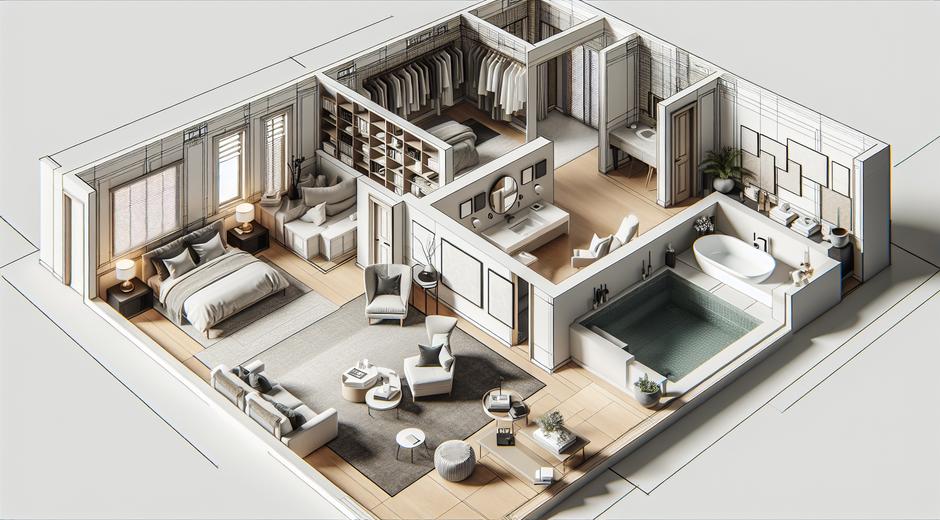
Every master suite layout should balance five core elements. First, a comfortable sleeping area with room for circulation and furniture. Second, an adjacent bathroom that is private and well ventilated. Third, generous closet space that meets storage needs. Fourth, optional living or work niches for reading or remote work. Fifth, thoughtful access to natural light and exterior views. When these pieces come together the suite feels like a private retreat rather than just a bedroom with a bath.
Zoning and Flow
Zoning is the foundation of a successful master suite layout. Place the sleeping zone away from high traffic areas to reduce noise. Create separate zones for sleep and dressing. Visual separation can be achieved with partial walls, furniture placement or ceiling treatments. Circulation paths should be direct and unobstructed. Aim for clear routes from the bed to the bathroom and closet with at least ninety centimeters of clearance. Good flow reduces daily friction and enhances perceived space.
Bedroom Size and Proportion Guidelines
Proportion matters more than raw square meters. A well proportioned master suite allows for a large bed, bedside tables and a seating area without crowding. Consider a room width that allows the bed centered on the long wall while leaving space for circulation on both sides. A ceiling height increase or a tray ceiling can enhance the sense of volume with minimal footprint cost. Keep windows sized to provide a balance of light and privacy. East facing windows are ideal for gentle morning light while avoiding intense afternoon heat.
Bathroom Considerations
The en suite bathroom is a key selling point in any master suite layout. Configure the layout to separate wet zones from dry zones. A layout that places the shower and bath toward the exterior wall simplifies plumbing and ventilation. If space allows include double vanities to support morning routines. A toilet niche or small enclosed area enhances privacy. Consider a bench or ledge in the shower for safety and convenience. Materials should be durable and water resistant while delivering a sense of luxury through textures and finishes.
Closet Design Strategies
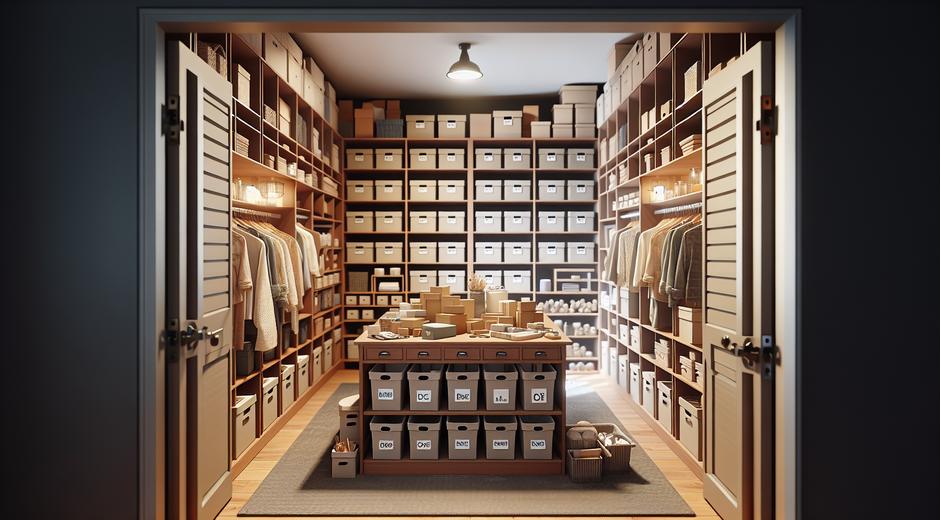
Closet design has moved from an afterthought to a defining feature of a master suite layout. Opt for a closet that fits the lifestyle of the homeowner. A roomy walk in closet supports curated storage including long hanging for coats, short hanging for shirts and stacked drawers for folded items. Built in shelving and adjustable rods increase flexibility. If footprint is limited consider a dual entry closet that serves both the bedroom and bathroom. Thoughtful lighting and ventilation extend garment life and improve usability.
Flexible Spaces and Multi Use Elements
Modern master suite layout often includes flexible space for a home office, nursery nook or a small wellness corner. Integrate these elements without compromising the primary functions. A small desk with integrated storage can double as a vanity. A seating area with two chairs creates a private reading spot. If you plan to stage or market the property include a simple media wall that can be hidden when not in use. Flexible design increases appeal across a wide buyer segment.
Lighting and Ventilation
Lighting and ventilation are critical to a master suite layout. Layer lighting with ambient, task and accent sources. Ambient lighting provides overall illumination. Task lighting supports reading and dressing. Accent lighting highlights design features and creates mood. Natural light should be maximized while maintaining privacy through glazing treatments or strategic landscaping. Mechanical ventilation in the bathroom helps manage humidity and protects finishes over time.
Material and Finish Choices
Materials define the look and long term maintenance profile of a master suite layout. Choose flooring that is comfortable underfoot and coordinates with the rest of the home. Engineered timber, high quality laminate and natural stone each bring different character. Wall finishes should be neutral enough to appeal to buyers while durable enough for daily use. In bathrooms choose water resistant wall panels or tile with minimal grout lines to simplify cleaning. Hardware and fixtures in consistent finishes tie the suite together visually.
Privacy and Sound Control
Privacy is a major driver of satisfaction with a master suite layout. Locate the suite away from noisy living areas when possible. Use acoustic insulation in separating walls and consider solid core doors for enhanced sound control. Window placement matters for both privacy and light. Frosted glass or high level windows allow daylight while protecting sight lines. Exterior landscaping such as evergreen screens can create quiet outdoor views for bedroom windows.
Accessibility and Future Proofing
Plan a master suite layout with long term needs in mind. Wider doorways, step free transitions and accessible shower thresholds make daily life easier as needs change. Design plumbing and electrical layouts that can adapt to potential future upgrades. Simple design choices that add accessibility do not require a trade off in style. A future proofed master suite increases appeal to a wider range of buyers and supports aging in place.
Staging Tips and Market Appeal
When marketing a property the right staging emphasizes the master suite layout strengths. Use coordinated bedding and minimal clutter to showcase scale. Define separate zones such as sleeping and seating with area rugs and furniture placement. Highlight storage capacity by keeping a few drawers open and showing organized shelving in closets. High quality photographs that capture natural light and flow will make listings stand out. For more insights on property presentation and layout inspiration visit metropropertyhomes.com to explore examples and resources that align with current buyer expectations.
Tools for Visualizing a Master Suite Layout
Accurate visualization helps clients and buyers understand the potential of a master suite layout. Use simple sketches to test furniture configurations and circulation. For more polished renderings consider online visualization services that produce high quality images and virtual tours. These tools speed approval and help sell floor plans to clients. For advanced visualization options that can transform a layout into immersive imagery visit Moviefil.com to review services that pair well with design and staging workflows.
Final Checklist for an Effective Master Suite Layout
Before finalizing a layout run through this checklist. Confirm that sleep, bathroom and closet zones are distinct and connected by clear circulation paths. Ensure adequate natural light and balanced artificial lighting. Verify storage meets lifestyle needs and that finishes are durable and cohesive. Evaluate privacy and sound control measures and consider accessibility improvements that do not compromise aesthetics. Finally validate that the suite complements the overall home layout and enhances long term market appeal.
A thoughtful master suite layout transforms a private area into a restful retreat that supports daily life and adds tangible value. By focusing on zoning, flow, storage and flexibility you create a suite that feels custom and welcomes a wide range of buyers and occupants.